(State #41/50) I woke up in an empty terminal, surprised to feel rested. I’ve tried before, with little success, to sleep in airports. Typically, there’s a frequent, booming robotic voice saying “Welcome to…” and reiterating why it’s a bad idea to let a stranger place a bomb in your carry-on. The main objective, it often seems, is to prevent any travelers from dozing more than ten minutes. If you somehow manage to sleep a few hours, you will inevitably wake up to a gate swarming with crying children and beaten down families waiting on their next flight. Sometimes, it’s almost like airports aren’t meant for sleeping.
So, when I arrived in Fairbanks at midnight, with no intention of getting a hotel, I assumed I’d spend a restless night on the floor. I found an empty gate and built a nest in a corner, beneath a row of seats. I drifted off and, in a true North Pole miracle, slept undisturbed. I awoke after eight o’clock to discover I was the only traveler in the terminal. I stood up, stretched, put on pants and wandered down a few gates to order a coffee — a pleasing start to my first morning ever in Alaska.
That evening I sat on a bear barrel in a puddle-filled parking lot, waiting. A van arrived and out poured my brother and two cousins. They were fresh off the train from Denali, where they had backpacked over squishy tundra and through low trees. They checked in and snuck me up to the hotel room, where their backpacks had exploded; clothing, water bottles and zip locked bags of oatmeal coated the beds and floor. Wesley and Shane, having already served their time in my canoe, geared up for a Gates of the Arctic adventure. Now, it was cousin Mindy’s turn to join me and brave 40 miles of an Alaskan river.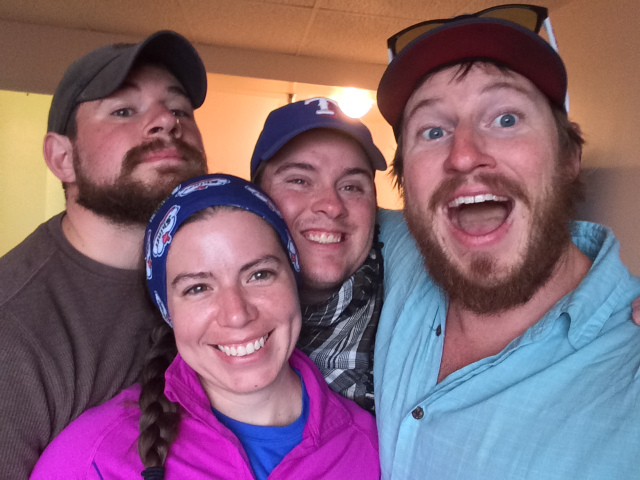
Mindy, the poor thing, has one brother and three male cousins on the Straw side. At home, she took dance, played flute and collected small glass horses. At our country place, however, we conscripted Mindy into our plastic gun-toting armies, dam constructing detail and, often, just digging holes with unclear goals in mind. Now, my older cousin joins us for long backpacks and runs marathons. Perhaps there’s some connection between the senseless dirt-moving activities of our youth and her penchant for strenuous physical feats. Nevertheless, Mindy remains skeptical of any activities we drag her into.
“Remember, I haven’t canoed in a long time,” Mindy reminded me as we drove out of Fairbanks. She worried that we were going to canoe a fast flowing, rapid-filled affair. So when Cat (from Alaska Dream Adventures) deposited us on the banks of the more mild Chatanika, Mindy was relieved.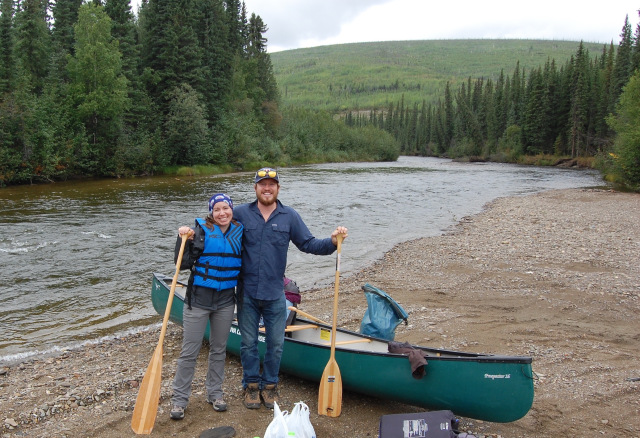
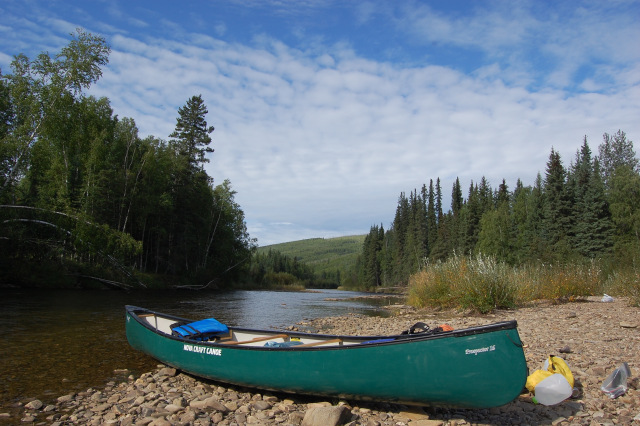
After I gave Mindy a brief tutorial on paddling, we launched an un-named, new canoe under the misting sky (Rider waited, high and dry and rightfully jealous, back in Seattle). The Chatanika wasted no time on introductions. Within a hundred feet, the river wound through cut-banks, where the water narrowed into fifteen-foot channels. Pressing, the water formed slopes against these bends like the outer lanes on a racetrack; a phenomenon I’d never seen. Adding to my unease, the current undercut weak-rooted (from permafrost) spruce and aspen, which fell into the river, creating “sweepers.” Though Mindy was unaware, I stressed while trying to prevent swamping in the freezing waters or being skewered by the dead trees.
“Something’s in front of us,” a faint voice said. I saw a big strainer, fifteen feet off the bow. I maneuvered to avoid the log, which would have scattered us into the river. “Mindy, call that out louder!” I said. A couple minutes later she did; I leapt out of the boat and stopped the canoe from going into a series of disastrous logjams. We scouted the gravel bar for a way to portage, but it was stacked chest-high with washed-down trees. So, Mindy got out some cord and we used it to lead the canoe around through the rushing waters and past the dangerous obstructions.
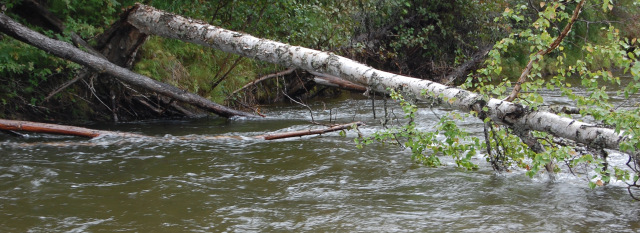
An Aspen to avoid
By evening, I was happy to make camp. We chose a mossy permafrost upland and placed the tent atop the great northern shag carpet. Some aspen and spruce grew, stunted and thin, while many of their relatives stood dead and burnt or lay strait across the ground, like big used match sticks — slow rotting relics of a hardy life*. With bear-spray in-hand, we stepped over moose tracks and piles of scat and stared at the shallow arching hills of the river valley. We looked and looked for moose and bear. Nothing. Just silent and still wilderness, rolling on over the hills to more Alaska.
Gathering firewood, I studied the tiny wintergreen spruce trees, some sprouting only a few inches high from the orange and green and white array of mosses and lichen; I felt like a giant, plodding around camp. Aspen saplings joined in, helping the allusion of the micro forest. I’d grown used to tantalizing views of mountains and sunsets over water, but never had peering down at my feet been so captivating. Along with the baby trees and dead wet logs, mushrooms abounded. “What about this one, Mindy?” I asked, pointing to a red and white capped toadstool, “Can we eat this one?” Mindy shook her head. “No! We’re not eating any of these mushrooms!” Always so damn sensible, I thought (My cousin didn’t budge from that position, even after I told her it might be the only way we’d see the Northern Lights).
The Alaskan summer evenings last forever. Hours and hours of low-angled light pass by and you’re only halfway to remote darkness. The light rain abated and bits of blue sky and sunshine broke through the gray dome. Though it required a lot of maintenance, we got a fire going. I prepared whiskey and cokes and, breaking normal protocol, Mindy played her Alaskan mix as the sun took it’s time setting. Sometime… maybe eight, maybe ten o’clock… we stuck sausages on black spruce branches and roasted our dinner over the taiga fire.
A cold, rainy morning gave way to clearing skies and a warming sun. After breakfast burritos, Mindy-made coffee and we set out for the second day. As we continued down, thicker forests replaced the burned, bare sides of the sweeping hills. Glittery minerals sparkled beneath the Chatanika as the sun found gaps between white clouds. The enveloping scenery wasn’t the dramatic faces and glaciers of the Alaska Range, but it was enamoring — unlike many places on my journey, there was no doubt where we were canoeing.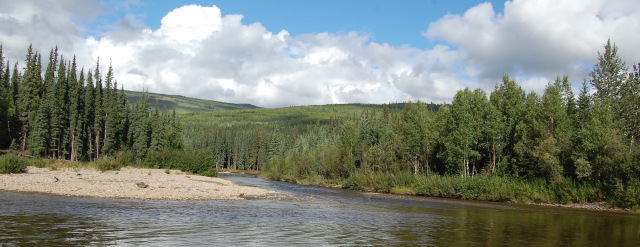
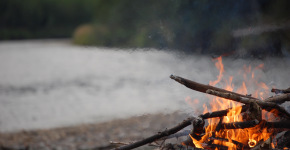 We found camp on a sandbar that evening as the sky clouded over and temperatures dropped. Mindy and I bundled up and set a collected mass of driftwood ablaze. Warming by the fire, we made drinks and ate canned chilly for supper. It was our last good chance to see the Aurora, so we devised a strategy. It was simple — I’d look skyward when I got up to pee and wake her up if I saw anything.
Around 2:30 a.m. I stood outside the tent and stared at a patch of clear sky. In the Alaskan summer, the sun doesn’t as much set as just skip off the horizon, as a light blue glow follows the unseen polar star across the northern sky. I didn’t spot the Northern Lights, but it was worth the chilly minutes to behold the night.
I know, poor me
On our final day, the low, wide hills gave way to higher summits, thick with verdant, sun-soaked spruce forests. Even the trees along the river grew taller and more robust. Already behind from a porcupine sighting, the Chatanika took one last shot at swamping us. After flying around a small island, piled with logs, the river swept our boat into a ten-foot wide channel. The current rushed towards the left cut-bank, beneath a jagged, downed spruce. In heroic fashion, I managed to point Mindy away before I crashed into the tree, arms outstretched for impact. We avoided flipping, but the spruce gave me a nice little gouge on my left hand.
We paddled the final stretch, joking about continuing onward, down into an ever-snaking, never-ending wilderness of Minto Flats. Instead we pulled out at the bridge where Cat and Tony waited for us. We were two hours late, but they just seemed pleased we had survived… I mean paper work alone… Jokes aside, they were wonderful 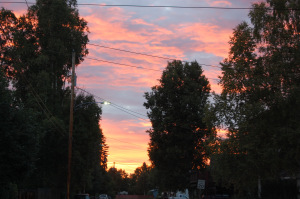 outfitters and even showed us sights driving back to Fairbanks. In town, we met Wesley, ate Thai food and saw the house where our Fathers had lived in 1961. Satisfied with the day, the trip and the glimpse of ancient family history, we strolled back to our hostel in the horizontal light of another slow burning, late summer Alaskan sunset.
*Black Spruce seeds after wildfires, which helps them reestablish burned areas. In the absence of fire, hardwoods, such as quaking aspen, will take over a grove. Wildfire, while appearing solely destructive, is a crucial part of most North American ecosystems, even way up in Alaska.
River Stats and Fun Facts:
- Chatanika River, Alaska
- Dates Canoed: 8/19-21/2017
- Miles Canoed: 40
- Weather: Rainy and overcast with nighttime lows in the upper 30s to partly cloudy with highs in the upper 60s
- Elevation: From Approximately 1201 to 504 feet above sea level (no wonder there was such flow!)
- Launch Point: Mile 60 (65.272976, -146.64731)
- Campsite #1: Taiga burn area (65.215505, -146.972351)
- Campsite #2: Sand Bar (65.15153, -147.380819)
- Takeout Point: At Elliot Highway (65.083577, -147.726223)
- Songs Sung on River: Alaska and Me by John Denver and Stephanie Says by The Velvet Underground (“Cause sheeee’s not afraid to die, the people all call her Alaska”)
- Huge thanks to our outfitters, Alaskan Dream Adventures, for their knowledge,
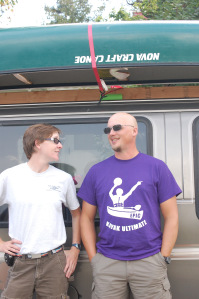 low prices and flexibility in meeting our specific timeframe. Cat and Tony are friendly, professional and good company, too. Cat dropped us off with a beautiful new canoe, good paddles and all the proper gear. Wonderful experience. Contact: alaskadreamadventures@gmail.com (907-460-2909). Also worth noting: Tony hosts kayak ultimate frisbee games during the summers, of course.
 - Thanks to Uncle Russell for creating my new fiberglass tent pole (replacing the thrice broken aluminum, which wouldn’t have made it to Alaska). Thanks to Wesley for being the courier and delivering it to me in Fairbanks. Thanks to Dad for researching places to canoe and doing all the leg work to put me in contact with Tony. Also, big thanks to Julie (and Marcus) for letting me park my car and canoe at her place in Seattle!
- Birds: Bald Eagles (2 adult, 2 juvenile) Gray Jay, Crow, raven, song birds, kingfisher, hawk
- Mammals: Porcupine! and beaver (Grizzly tracks, moose tracks, droppings)
- Noted Species: Grizzly Bear, Black Bear, Timber Wolf, Lynx and occasional Caribou
- Dominant Vegetation: Black Spruce, Quaking Aspen, Paper Birch, Balsam Poplar and White Spruce
- Ecoregion: Split between Interior Highlands, (105) and Interior Forested Lowlands and Uplands and (104). I had no luck finding Level IV designations
- Current Threats: Potential pollutants from historic hydraulic mining activities
- Trash collected: some rope, tin cans and micro trash (not much garbage!)
- Fundraiser for American Rivers: Currently at $3447 of my $5000 goal. Please go to my Crowdrise link below to donate. American Rivers is a 40+ year old NGO working to clean up rivers, remove antiquated dams, restore riparian ecosystems and preserve Wild and Scenic Rivers among much else. If you find my trip remotely inspiring, please consider donating! As always, thanks to all that have already given! https://www.crowdrise.com/canoe-50-campaign
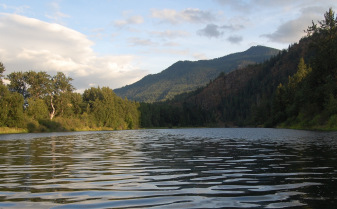 (State #40/50) “Who knew Idaho could look so good?” my friend Lawrence remarked in response to a picture. He wasn’t alone with this reaction. “That’s so much prettier than I would have thought for Idaho,” another friend said of a sunset photo. I had no idea the state wasn’t widely regarded as scenic; searching for someone or something to blame, I landed on the potato. After all, could a state known for brown, odd-shaped tubers be worth a damn?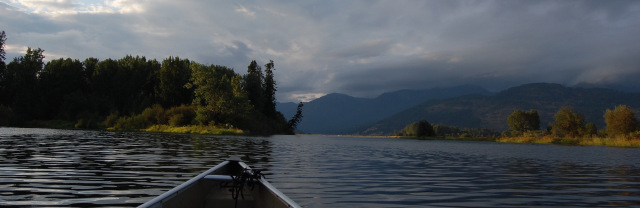
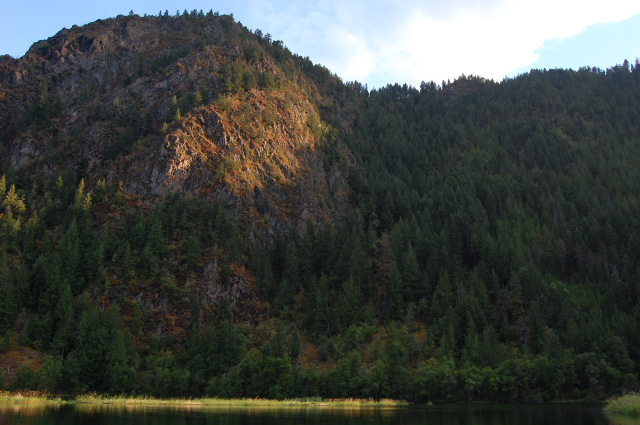
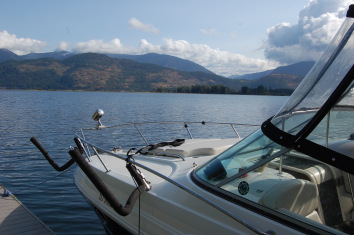 I cracked a beer and met the only other person out there — a guy named Drew with a collection of dogs and a boat anchored on the river side. Drew was a native Idahoan, who had spent time in Texas, stationed at Fort Hood back in the 90’s. For almost an hour, we talked Texas and its important subsets, including bass fishing, tornadoes, brisket and salsa. After the sun set, Drew returned to his boat and I returned to mine for a twilight canoe out on the lake.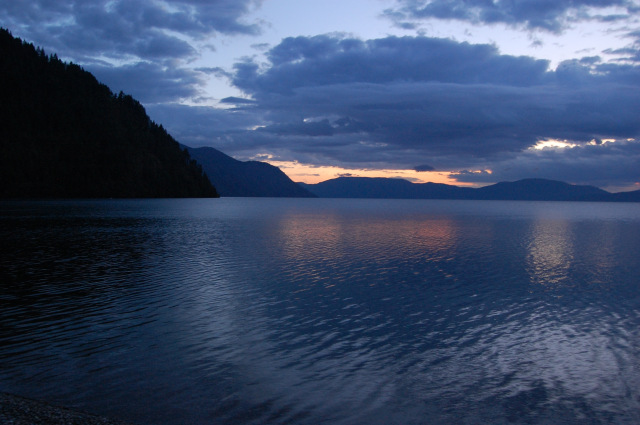
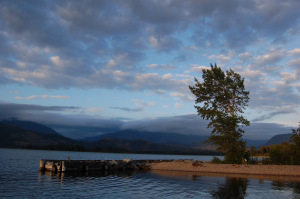 I slept well, waking to a sun-warmed tent. I stepped out into daylight and ran into Drew, walking through the path between the brush. “Come grab some coffee! I know what it’s like to live off of the instant stuff.” He told me. We walked the dock with his dogs, drank real coffee and watched the sea planes fly in and out of the Clark Fork valley.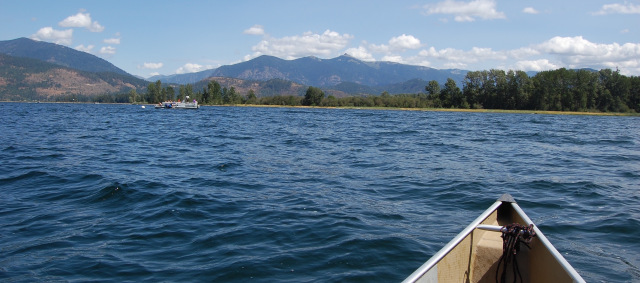
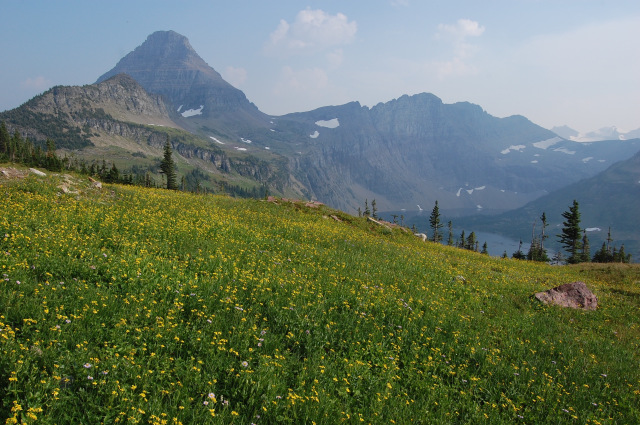
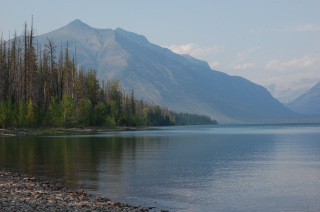 (State #39/50) Sitting on a peninsula no larger than a tennis court, I watched gentle waves lap against the colorful, flat, stones of the shore. In both directions, a smooth, long lake filled the bottom of a u-shaped valley. Peaks of sheer gray rock rose up, beyond the blue water, beyond the conifer forests, until they mingled only with snow, contrasting against the sky. Over a hundred years ago, someone dubbed this park the “Crown of the Continent.” Though I’m one to ridicule overindulgent titles, I approve of this one. Glacier National Park is beyond an international treasure and, for a night, I got to lay claim to a little piece of the fortune.
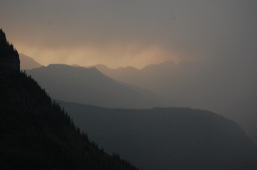 Like Yellowstone, Glacier was smoked in by surrounding wildfires. So, when late afternoon storms overtook the high peaks, I reasoned well, at least this rain will help with the fires. The next morning, however, I learned that lightning had caused multiple additional fires in the park. Furthermore, Glacier was not issuing any new backcountry permits. Yet the rangers still honored mine, proving again, it never pays to wake up early.
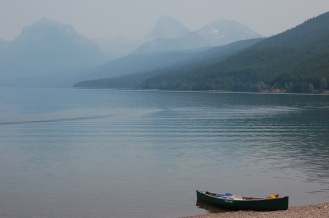 At the edge of Apgar Village, I geared up my canoe. There, my fellow tourists filled restaurants, gift shops and parking lots. Retirees meandered, children ran loose and folks of all kinds rented kayaks. A group of Jehovah’s Witnesses sat under a tent in an open grassy area. I felt their smiling, beaming, come-hither stares upon me as I looked at my feet and made a long, elliptical pass. I nearly walked into another group, thankfully, in ranger uniforms. “What’s that all about?” I asked. “Oh, it’s free speech or something,” an older ranger said, unwilling to hide his feelings. “Can you imagine the outrage if that was a Muslim group?” he asked. I saw his point, but changed the subject. “What’s the telescope for?” It was a dumb question as the sun was the only visible celestial object above us. I took a look, through the protected filter, and confirmed that the sun was both still round and still orange. I thought about egging on a fight between the rangers and Witnesses, or at least going to tell the group the good news that the sun still shone, but I had a lake to canoe.
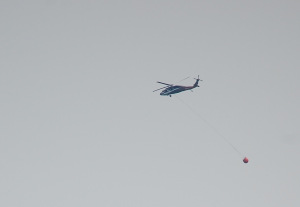 Paddling away from the hubbub, I counted 400 consecutive strokes before stopping over a mile into Lake McDonald. Helicopters carried trailing buckets of water towards the new forest fire, which exhaled blueish smoke skyward from a mountain, adding to the haze. I made the other side of the lake and hugged the shoreline. Soon, the thick pine forests gave way to an old burn area. Beneath charred poles, juvenile pines, birch and flowering shrubs made their slow race towards the sun. I passed near a cliff and looked down at the clear water, which transitioned into deep glacial-blue as the bottom of the lake fell off into oblivion. I’m snorkeling today, I decided.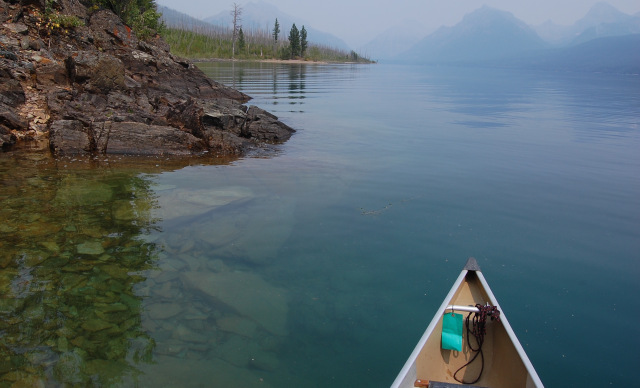
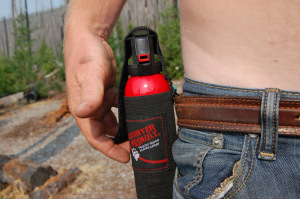 Arriving at camp by mid-afternoon, I kept my life vest on and explored with my bear spray out of its holster, finger near the trigger. Part of procuring a backcountry permit is the mandatory viewing of a twenty-minute video on grizzly bear safety. Typically, these are the types of videos people scoff at, but the entire room remained attentive. We only broke the silence when the narrator said, “play dead if it’s a defensive attack… However, fight back immediately if the bear starts to eat you.” Those words, said with utter sincerity, forced the room into nervous laughter (more on Grizzly safety below).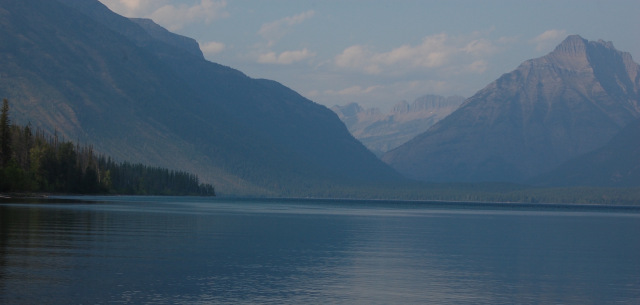
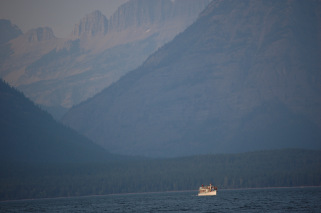 I enjoyed the tranquility before a tour boat interrupted, passing a few hundred yards out on the lake. The sound of a guy yammering on a microphone carried over the water. Immediately, I hopped up and began dancing, with wild exaggerated moves, to unheard music. Unbuttoning my long sleeve shirt, I helicoptered it above my half naked body before commencing further lewd stripper routines. I’m unsure if any of the twenty passengers saw, but I hope, with all my might, that a sweet old pair of birders from the mid-west got a glimpse of true wilderness in action.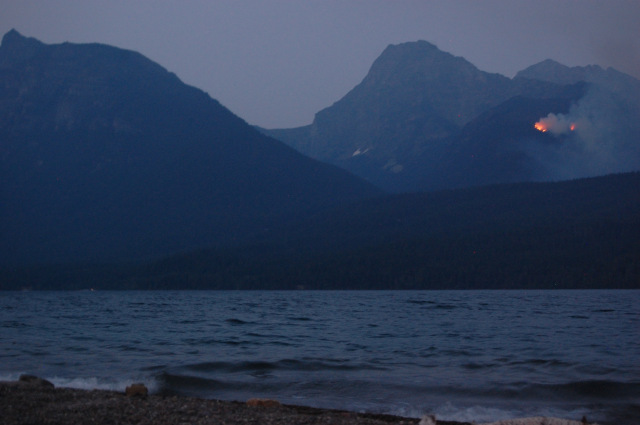
 (State #38/50) Right after I told her my Canoe 50 plans, Taylor claimed Wyoming. Visiting the Grand Tetons, as she explained, was on her bucket list. So was seeing a wild moose — something I assured her, with the utmost cockiness, that’d we’d accomplish without problem. Well, after our canoe to Lake Shoshone and five full days in the Northwest corner of Wyoming, I can say we accomplished exactly one half of my girlfriend’s goals…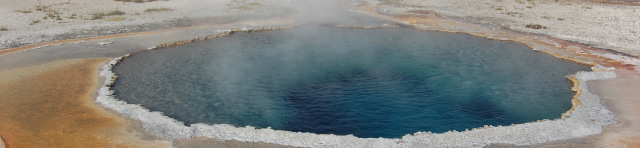
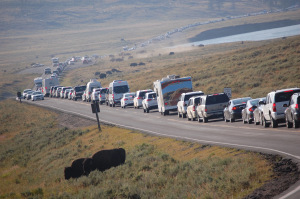 There are times and places — ballgames, fairs, concerts, public executions, etc. — where being amongst a massive crowd enhances the experience. For me, National Parks aren’t on that list. Therefore, I was thrilled to leave the swarming boardwalks and overflowing parking lots and show Taylor some true Yellowstone wilderness. And Lake Shoshone, the largest Lake in the lower 48 with no road access, was just the place. To get out there, you either hiked or paddled; either way, you’d leave 99% of the dawdling masses behind.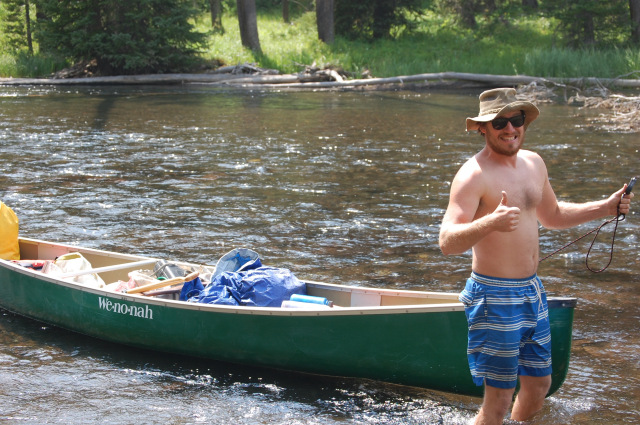
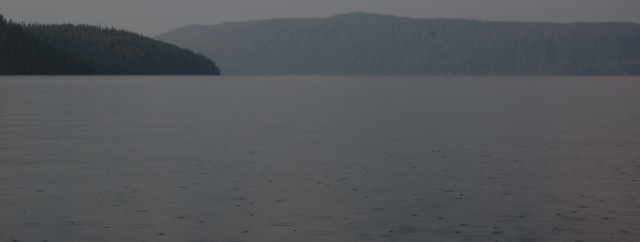
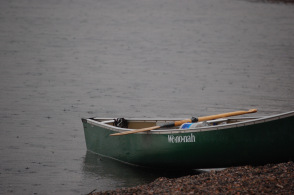 Despite the weather, Taylor kept cool and kept paddling. We bobbed on through rain and wind, trying to cut the larger white-capped waves, now rolling across the greater expanse of Lake Shoshone. Nearing the final cove, we canoed out into open water to avoid getting broadsided. Up and over with thuds and splashes, Taylor and I pressed on until spotting the small sign for our camp, sweet glorious camp! We reached land, threw up the tent and sheltered as the storm marched eastward.
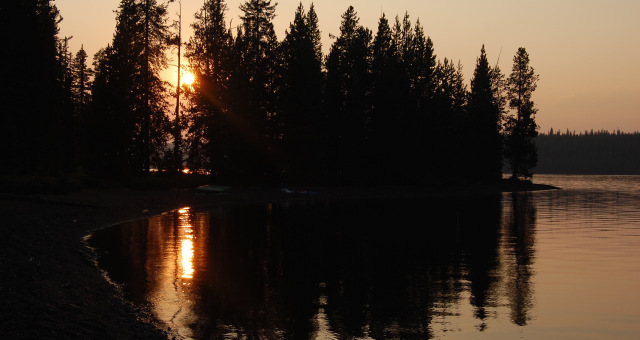
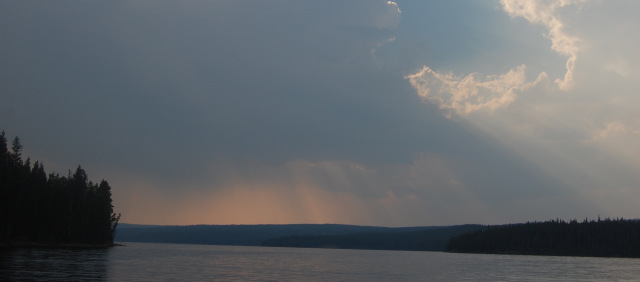 We sprayed down with mosquito repellent, made drinks and set up the tarp on the beach. Taylor and I gazed over the lake and discussed vital matters of life like the new season of Game of Thrones and whether Emily Blunt could pull off being Mary Poppins. By drink number three, we thought it an excellent idea to take turns singing songs. Taylor, knower of all things Disney, went straight to theme song of Hercules. I fell back on Sublime, a favorite from my youth. And yes, I do see the irony of finally finding a quiet, peaceful spot in the National Park, only to taint that silence with my off-key vocalizations. But, our singing had two important results: 1. We were thoroughly entertained and 2. We frightened off all possible grizzly bears within several miles.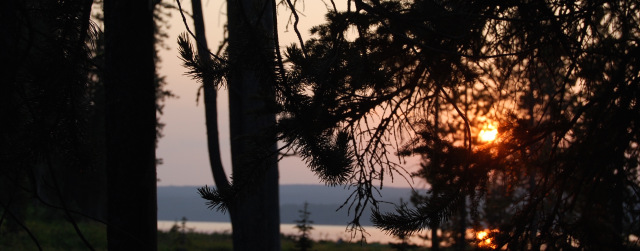
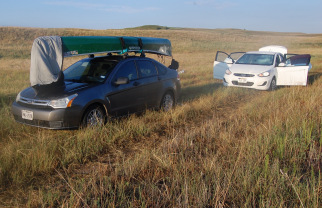 flashlight. “Crap,” I uttered as I stared at a flattened tent. I ran out to survey the damage — the same twice-broken pole had snapped and was now protruding through a foot-long gash in the rainfly. When the storm ceased, we stood over the defeated shelter before digging out our soaked-through sleeping bags. With shrugs, we retired to our separate cars for a lousy night’s sleep.
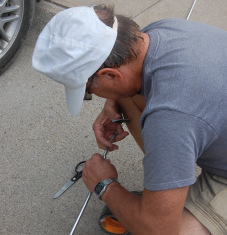 The next morning we went to the True Value in town where my uncle and the owner discussed the “terrible design” of my aluminum poles (take note REI). We bought 3/8th inch threaded plumbing pipe to use as a splint and repaired the pole and fly in a public park. “After your trip, I can rig you up something, retrofit it with fiberglass poles because it’s going to happen again,” my uncle said. If I ever possess 1/10th of Russell’s handyman prowess, I’d be a satisfied man.
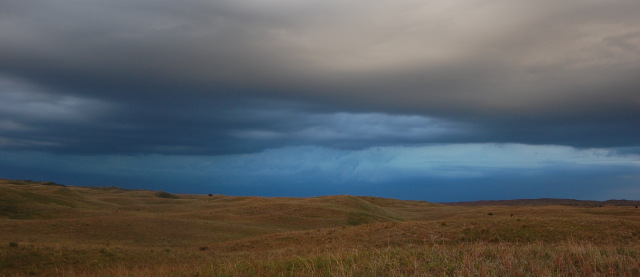
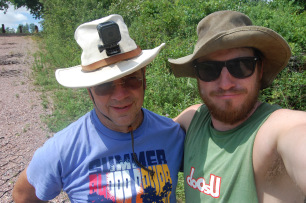 With the tent repaired, the cooler loaded, we put in the Niobrara River on a hot, sunny afternoon. The river was deceptive — we crashed into rocks beneath the green/brown water. Furthermore, the cut banks often had a sandbar where I’d expect a deeper, faster channel. We nearly got stuck on one under Buffalo Bridge, calling to question my already feeble grasp of stream geology. Yet, we got the hang of the river after a few miles and could focus less on the mechanics of canoeing and more on the scene we floated through.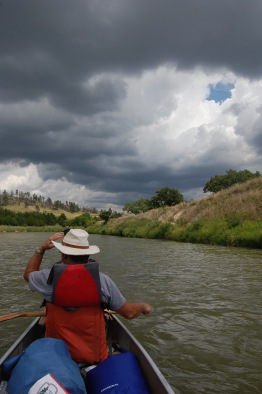
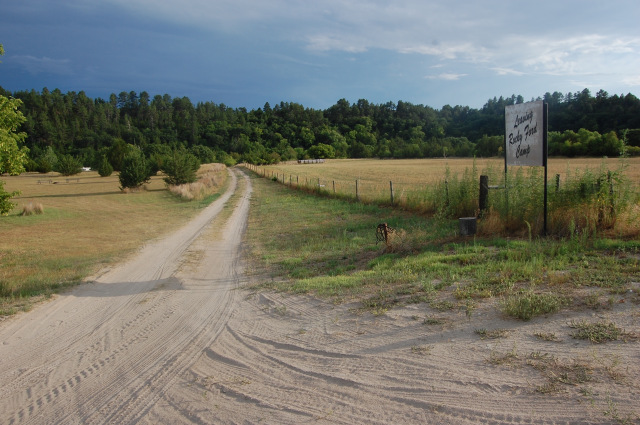
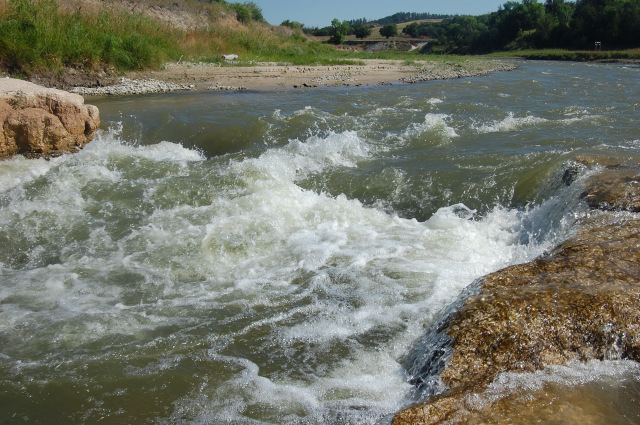
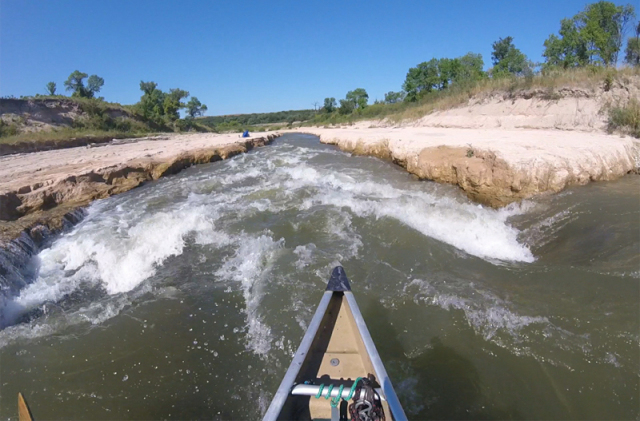
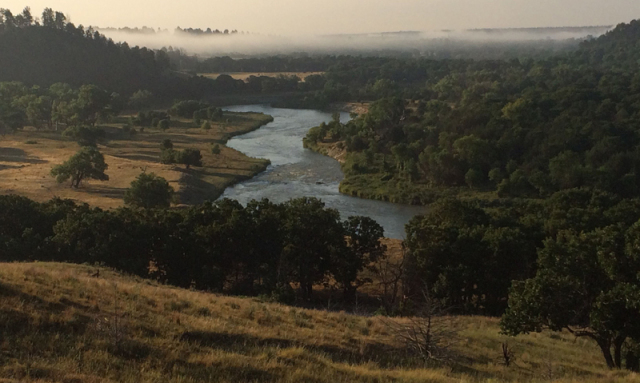
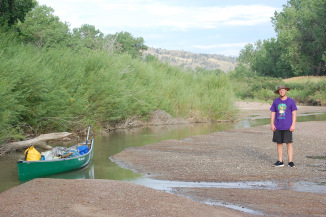 (State #36/50) Walking the canoe into a pool of muddy water, my cousin, Thomas, turned around. “Should we try?” he asked. I nodded and we hopped back in the boat. We paddled forward for about ten feet and then ran aground. Thomas and I strained and pried at the sand with our paddles, but it was no use — all forward progress had ceased. He looked back and I shook my head. Without a word, we both jumped out of Rider and commenced dragging the canoe downstream. The Cheyenne River, my ass.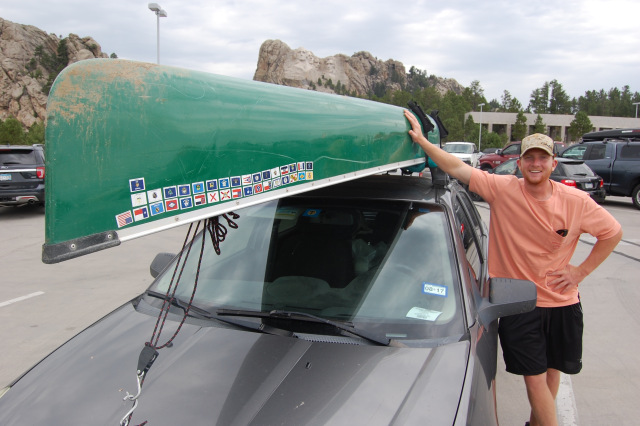
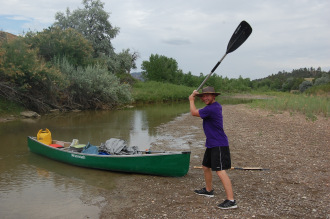 Thomas and I carried our gear down the sandy hill, past stables to the sand bar above the… Well, when Karla had asked “what stream?,” she wasn’t being funny. Standing by the Cheyenne “River,” I saw the drought’s true extent. The summer before, we were told, people jet skied here. It was difficult to imagine now, as my canoe was longer than the river was wide. I looked over at Thomas. He stood grinning, holding his paddle and wearing his life jacket. I laughed. “Take that thing off.” I said. “If we drown in this water then we deserve to drown.”
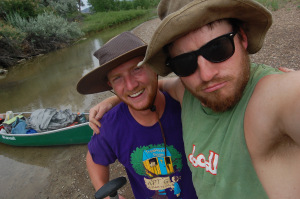 We fixed rum and cokes immediately, not even allowing the chance for frustration to drive us to drink. I pulled the boat out into the deepest water I could find — maybe a foot — and held Rider steady as Thomas jumped in the front. Then we were off, flying down the little yellow river for a good sixty feet until we came to a riffle and got stuck in the sand. “Alright, time to get out,” I said. Thomas guided the boat through and I helped her along until we reached the next stretch of suitable water. We jumped in, paddled a little, and jumped out to, again, walk the canoe downstream. We repeated this process until I lost count.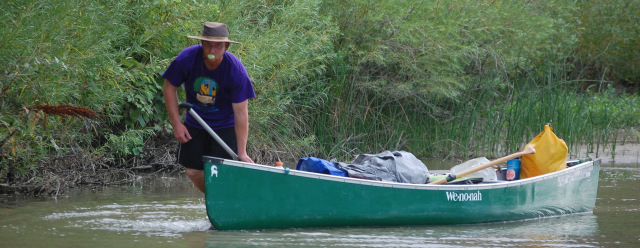
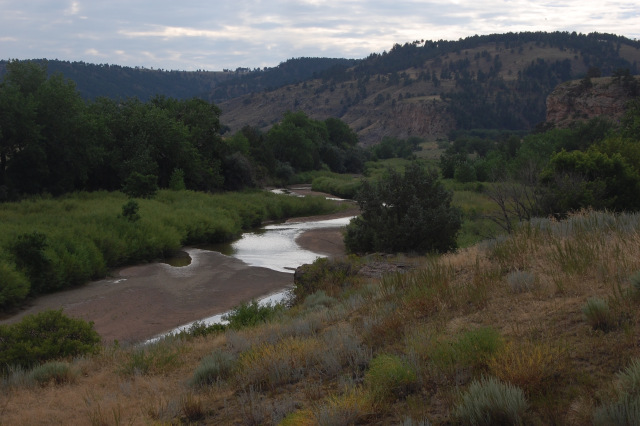
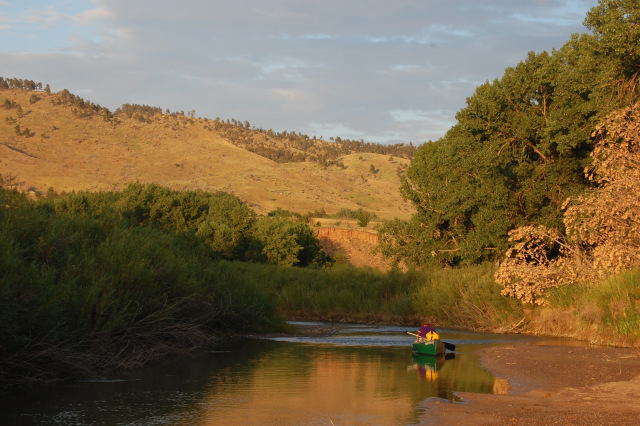
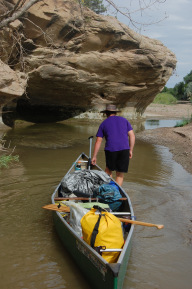 Driving to the Badlands that afternoon, I tried to distract Thomas as we crossed over the Cheyenne, again and again. Downstream from a reservoir, each stretch had three times more water flowing than where we had canoed… Yeah, it hurts to miss that one. But, but, but, our float was what people vaguely and all too commonly call “an experience.” I prefer the term ordeal. Yes, Thomas and I had an ordeal in South Dakota, but an enjoyable ordeal, which brings to mind a line from an ancient eastern parable, which I’m now making up… Sometimes, when traveling downstream, the canoe takes you and sometimes, you take the canoe.
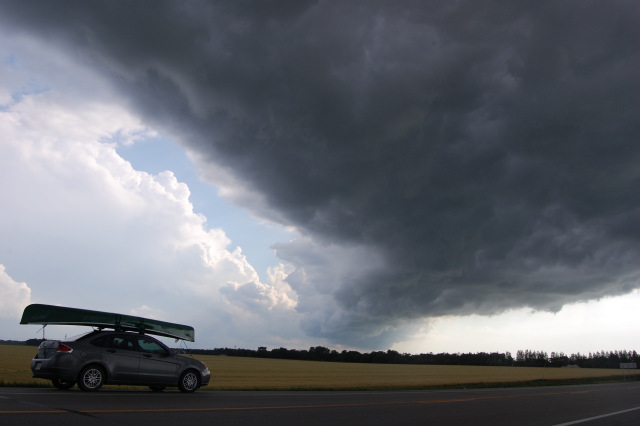
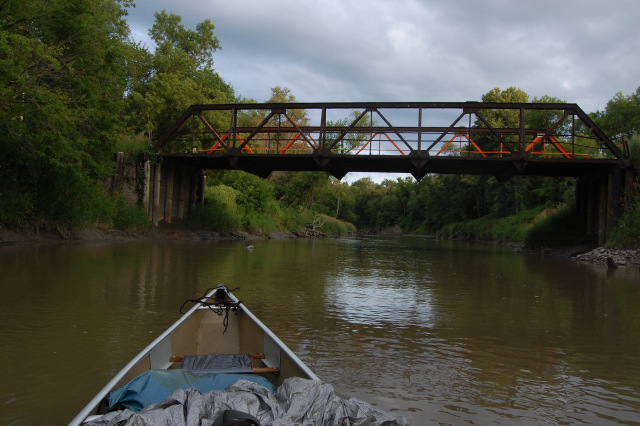
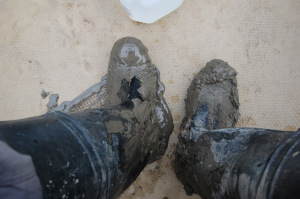 After a long, awkward process of bringing the boat down and loading it, I slid Rider halfway into the Sheyenne. With a graceless lunge, I pushed off and into the Sheyenne, bringing half of the bank with me. My boots slid around on the floor of the canoe, spreading the black mud about in a design that, if done on canvas by an elephant, monkey, or high-functioning Oklahoman could fetch thousands at a modern art auction. No matter. I’d worry about the mud and how I was getting out tomorrow. For the moment, I was heading upstream into the National Grassland.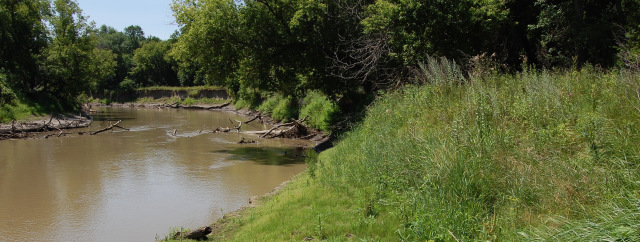
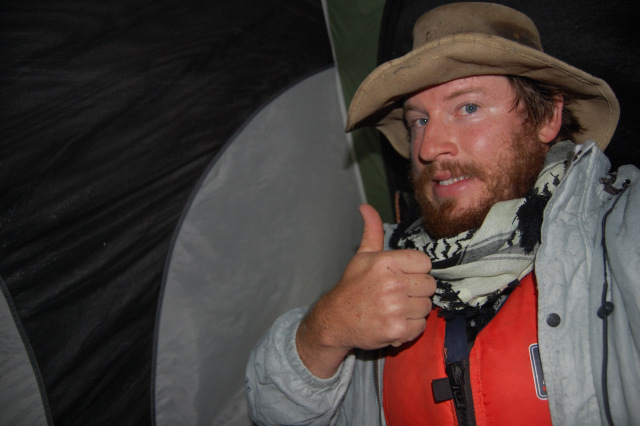
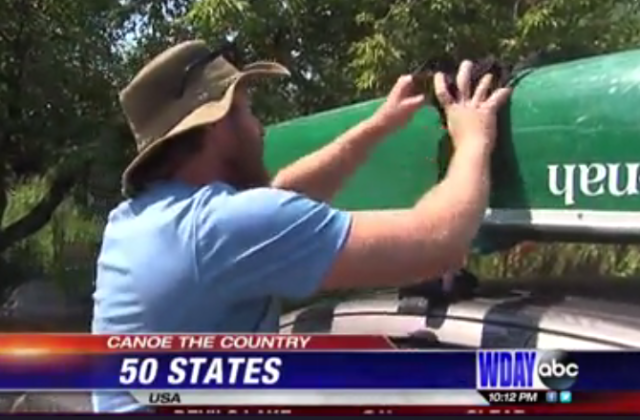
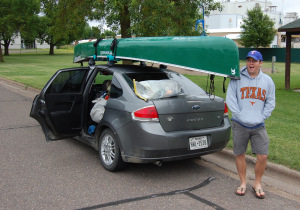 (State #34/50) Shane and I laid in the tent at 7 a.m., trying to sleep through the passing roar of eighteen-wheelers — turns out the country road we had pitched by wasn’t as lonely as I had hoped. We heard the sound of a vehicle pulling off the highway and crunch of gravel as the wheels drew near. “Ah-ohh,” said Shane. The engine cut, a car door opened and a voice called out in that distinct Minnesotan accent, “Sheriff’s Deputy here, step out of the tent please.” Perfect, I thought.
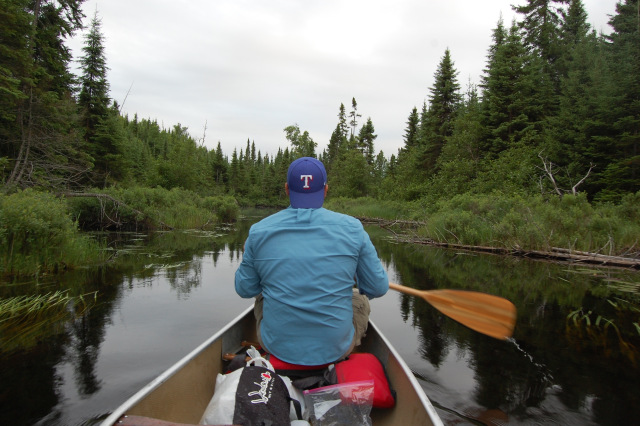 “We’re really going to go back, take it all down and put it up again?” Shane asked, pointing out we’d waste a lot of the evening. “Yep!” I said, promising we’d be swift. Well, being swift turned into a near-panicked frenzy when we spotted a red canoe a half-mile away, bearing down. Worried they were headed for our new island and wishing to avoid
 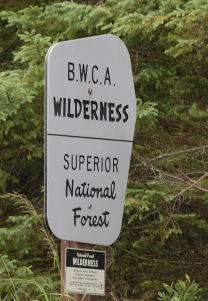 an awkward encounter, we scrambled to break camp and re-load. When we hit the lake the red canoe was upon us, paralleling our position a few hundred to the left. Without acknowledging each other, we paddled in hard, silent, sweaty competition towards the island. After an exhausting half-mile sprint, we edged them out. I know we should have wagged our genitals at our conquered adversaries, as Minnesotan custom dictates (or maybe I’m thinking of Scotland). But, instead we remained stoic as the canoe turned into the second site on the mainland, likely where they had been heading the entire time. No matter. We were triumphant and our reward was setting up camp, again.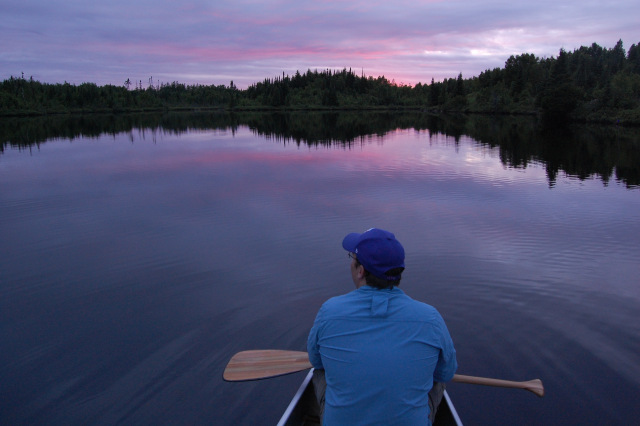
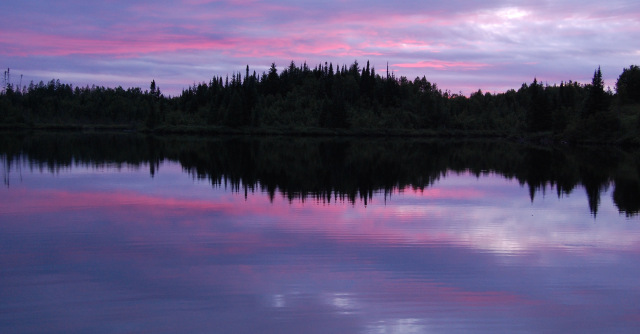
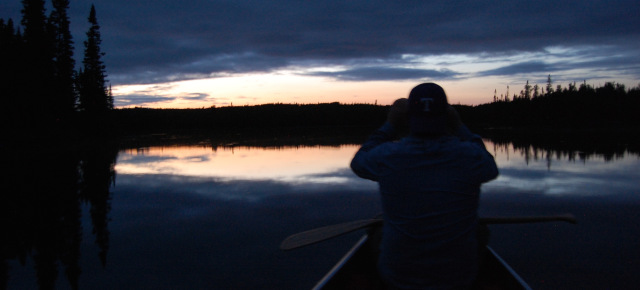
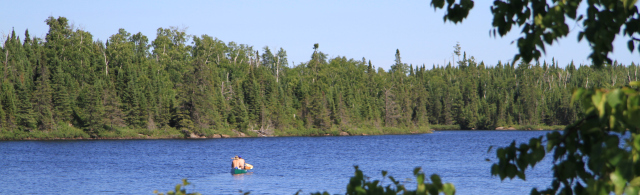
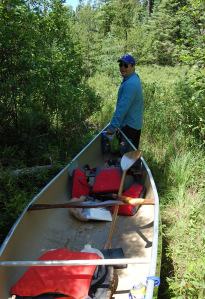 The sun was warm, bordering on hot and there was nary a cloud to be seen, a wonderful departure from the gloom and dreary drizzle of the previous day. We portaged to Whack Lake, a name that, as you may imagine, we had fun with. Then we found the route to the longer Vern Lake. We brought our gear first and then carried the boat over a hill to the lake. Scanning for wildlife, we discovered a distant, but clearly naked middle-aged woman, bolting for the woods. It was, after all, quite a day for skinny dipping.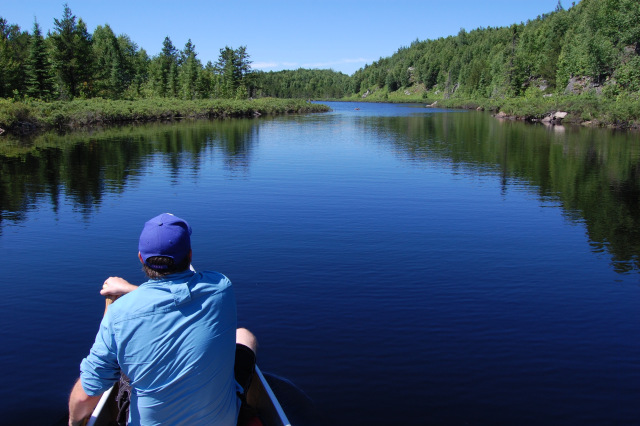
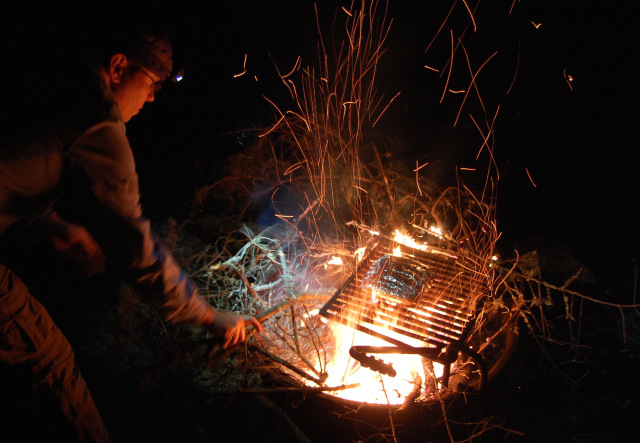
 A few days after I dropped Shane off at the airport, he had texted me that he hung The Boundary Waters map on the wall at his work. It had gotten wet in the rain, so we dried it over the fire that night on the island. Somehow the smoke clung to the eliminated paper and then abandoned it to fill his workspace in Las Colinas, TX. “Now my entire office smells like campfire,” Shane said. Perfect, I thought.

